
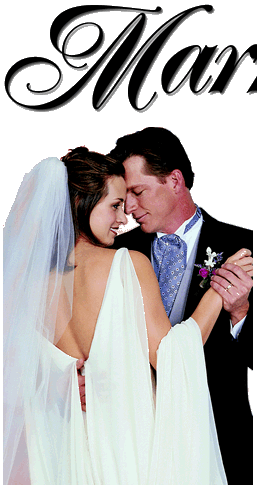

Discover Wedding Customs and TraditionsOne of the most ancient social customs in the world, weddings are full of customs and traditions. From throwing rice to wearing a veil, have you ever wondered where they came from? Many of these traditions have stood the test of time and evolved from generation. Here's a look at some of the most familiar wedding favorites and a few lesser-known customs: • In England, it was traditional to bake a ring into the wedding cake as a symbol of bliss and happiness. It was said that the guest whose piece of cake contained the ring could look forward to a year of uninterrupted happiness. * The custom of throwing rice at newlyweds symbolized fertility. Today, some still throw rice, but confetti, bubbles or rose petals are often substituted for safety and environmental reasons. Rice is easy to slip on and it can be fatal to birds who try to eat it off the ground. * Cutting the wedding cake together, still a predominant ritual at weddings, symbolizes the couple's unity and shared future.
• Another old English custom was to throw a plate with a piece of wedding cake out a window when the bride returned to her family home after the wedding. If the plate broke, she could expect a happy future with her husband. If the plate remained intact, the future looked grim. • The tradition of having members of the wedding party dress alike was started with the hopes that the mischievous spirits would be confused and go away. • The tradition of wearing a veil has a similar origin. Originally, the veil was thought to fool evil spirits by disguisng the bride. It was not until the start of the 19th century in Britain that the veil came to symbolize modesty and chastity. • It is believed that an unmarried male guest who puts a slice of wedding cake under his pillow when he sleeps will increase his chances of finding a mate. An unmarried bridesmaid who does the same will dream about her future husband. • In the past, if a young man encountered a blind person, a pregnant woman or a monk while on his way to propose to his intended bride, it was believed that the marriage would be doomed if he continued along his path because the images were thought to be bad omens. • May was an unlucky month to marry in Roman times because the Feast of the Dead and the Festival of the Goddess of Chastity both occured during this month. • Seeing a lamb, frog, spider, black cat or rainbow on the way to the wedding ceremony is a sign of good luck. Seeing an open grave, pig, lizard, a nun or a monk are thought to be bad luck. |
||||
