| Today's Coverage |
|
7-day
Weather |
| Features |
|
America
at War |
| Columnists |
|
Editor |
| Photo |
| Special Sections |
| Special Content |
|
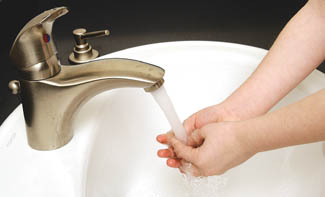
Take a look at your hands. First at the fingernails, then the palms and wrists. Do they look pretty clean? Is there no dirt under the fingernails, or smears of jelly from that sandwich you had at lunch? Even if your hands look clean, they probably aren’t. Germs are so small that you can only see them with a microscope. And even under a microscope they look tiny. It’s amazing that something so small could make you feel so sick. But it can. The germs that can stick to your fingers and hands can not only make you sick, but make others sick. Think about all the things you touch in a day: a doorknob, a pencil, a book. The germs on your hands can travel to these objects, and when someone else touches it they can get your germs. There are four different kind of germs. Bacteria cause infections like strep throat and even the cavities you get in your teeth. Viruses cause colds, the flu and fevers. Fungi (pronounced fun-JI) causes things like athlete’s foot and ringworm, a skin infection. Protozoa are tiny single-celled animals that can cause stomach aches and diarrhea. What’s the best way to go to war against these dangerous little creatures? Believe it or not, soap and water is your most effective weapon. Roxann Satkowksi, the nurse for Bedford Public Schools, says the most important part of hand washing is when you rub your hands together. This loosens up those germs and makes it easier for the water to wash them off your hands. If there are no germs on your hands, they can’t get into your nose, your eyes or your mouth. If they don’t enter your body, they can’t make you sick. So soap up, whistle a tune, and watch those germs go right down the drain. WHERE GERMS LINGER
|