|
| News | Sports | Columnists | Forums | This week's ads | Home Delivery | Store | Place a classified ad |
 |
|
| News | Sports | Columnists | Forums | This week's ads | Home Delivery | Store | Place a classified ad |
|

| .
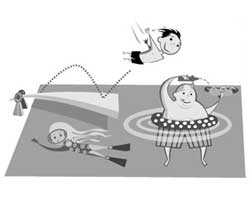
By Michelle Swartz June is a time when kids transform from students to water bugs. School is out and the swimming pool is officially open. But there is much more to swimming than jumping in the water and splashing around. It’s fun but it also canbe dangerous if you’re not safe around a swimming pool. “Kids see water and they think ‘cool and refreshing.’ They don’t think ‘danger and death,’ ” said John Osborn, aquatic director at Monroe Family YMCA. He’s referring to the possibility of drowning. Knowing the rules of the pool will help prevent drowning or serious injury. First thing to remember: Never swim alone. Always have an adult watching you. Another good rule is to know the depth of the water. You don’t want to jump into the deep end if you can’t swim or if you’re not a strong swimmer. If you want to swim in the deep end, wear a life jacket. Mr. Osborn also advises to avoid swimming between 10 a.m. and 2 p.m. — the hottest time of the day. If you do swim during those times, you must protect yourself from heat exhaustion. “It could hit you in a heartbeat. Kids are more prevalent because they’re so active. They lose body fluids from sweating and by not drinking enough,” he said. “Symptoms (of heat exhaustion) are dizziness, light-headedness and getting (physically) sick.” To help combat against heat exhaustion, wear waterproof sunscreen and drink lots of fluids. No matter your age, everyone should learn how to swim. The local YMCA offers swimming lessons year-round. Summer swimming lessons also are offered at the Dundee High School Pool and Dick Waters Pool at If you don’t know how to swim, make sure you wear a life jacket at all times. “I’m against water wings or any flotation device with air in it. If you get a hole in it, it’s not good to you then. You could be in real trouble and possibly drown,” he said. “Life jackets are the best devices to use if you don’t know how to swim.” Now that you know the rules of the pool, be safe and have fun! Water-related injuries In 2003, more than 3,300 drownings occurred in the For every child 14 and younger who drowns, five receive emergency department care for non-fatal submersion injuries. Near-drownings can cause brain damage. In 2003, 782 children 14 and younger drowned. Drowning is the second-leading cause of injury-related death for children ages 1 to 14. Among children 1 to 4, most drownings occur in residential swimming pools. Most children who drowned in swimming pools were last seen at home, had been out of sight for fewer than five minutes and were in the care of one or both parents at the time. Source: . |