| Today's Coverage |
|
7-day
Weather |
| Features |
|
America
at War |
| Columnists |
|
Editor |
| Photo |
| Special Sections |
| Special Content |
|
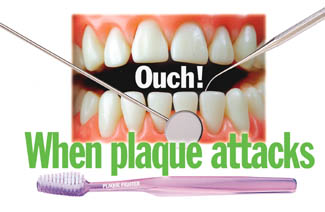
Cavity alert Learn
the facts about plaque and prevent tooth decay By
CYNTHIA
RAMNARACE You wake up in the morning and have a bowl of your favorite sugary-sweet cereal, the one with your favorite cartoon character on the box. At lunch you eat a peanut butter and jelly sandwich and maybe a few cookies. For a snack, there’s crackers maybe, or potato chips or pretzels. At home, it’s a glass of pop with lots of ice. You get to have more soda with dinner – a couple of slices of pizza with extra cheese and pepperoni. And once homework is done, you get a bowl of ice cream. Think about what you ate in one day. Sugary snacks, salty snacks. Even the stuff that was good for you – the sandwich – has sugar. And while you may really like sweets, there’s something inside your mouth that likes it even more: bacteria. In everyone’s mouth are microscopic creatures that are sharing your meals with you, said Monroe dentist David Yentz. Bacteria feed on the sugar in your soda, your lollipop – even a french fry. And when they’re done, they belch out acids that form plaque, a grimy film that sits on your teeth. Plaque robs your teeth of that oh-so-clean-and-smooth feeling, but that’s not all, Dr. Yentz said. It hurts your gums, causing the disease, gingivitis. Plaque produces its own acid, and that acid likes to eat through the outer layer of your teeth, the enamel. Enamel is the strongest element in the body, stronger even than bone, but it’s no match for plaque acid. The acid eats, and eats, and forms a hole. This hole is called a cavity. Odds are you don’t even know it’s there. It doesn’t hurt. But then the hole gets bigger, and deeper. It takes a while to get through that enamel, but once it hits what’s underneath – the dentin – things move really fast. And soon – ouch! The cavity reaches the nerve and you’ve got a toothache. All cavities must be filled, and often requires drilling, said Dr. Yentz. The bigger the cavity, the harder it is to repair. So say no to cavities. Pass on the pop and instead drink milk or water. Don’t eat candy every day. "Anything that sticks between the teeth, like caramel – if it’s going to stick to the tooth, bugs and plaque love that," Dr. Yentz said. Most importantly, Dr. Yentz said, brush and floss your teeth. Flossing removes plaque from between the teeth. Brushing helps get rid of the rest of it. Brush in the morning after breakfast, and at night before bed. Otherwise, think about the party the bacteria are having in your mouth while you sleep! |